Graduating from college is a major milestone, but deciding what to do next can be challenging. Many graduates wonder which IT course will help them secure a rewarding career, improve their technical skills, and open up better job opportunities.
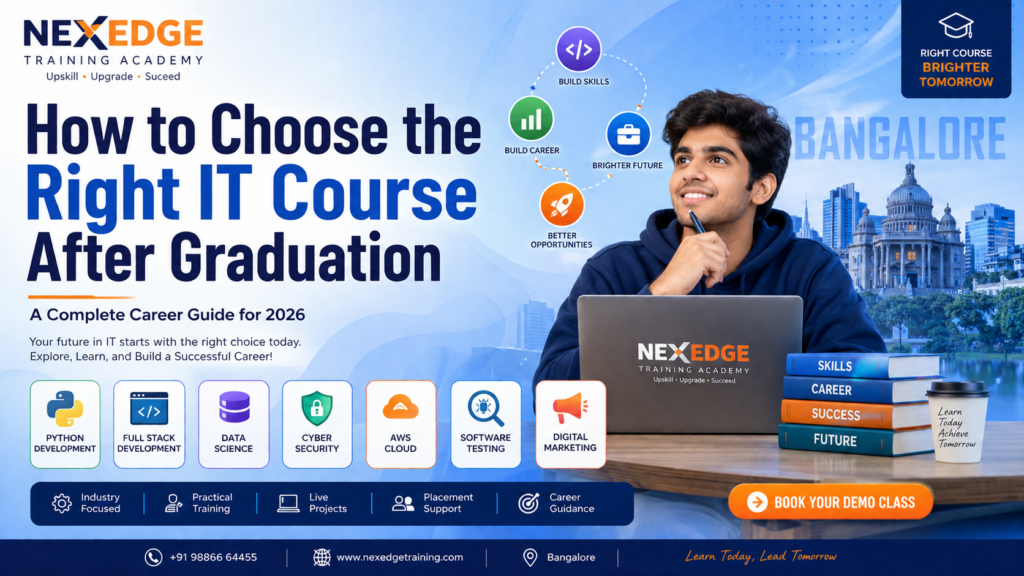
The IT industry continues to evolve with new technologies, making it important to choose a course that aligns with your interests, career goals, and market demand. Whether you’re from an engineering, science, commerce, or non-technical background, the right IT course can help you build a successful future.
In this guide, we’ll explain how to choose the right IT course after graduation and explore some of the most in-demand technology careers in 2026.
Why Choose an IT Course After Graduation?
The IT industry offers excellent opportunities for graduates due to its continuous growth and innovation. Organizations across industries require skilled professionals in software development, data analytics, cloud computing, cybersecurity, automation, and digital marketing.
Benefits of learning an IT course include:
- Better career opportunities
- Higher earning potential
- Practical technical skills
- Industry-recognized certifications
- Opportunities to work in global companies
- Career flexibility across multiple industries
Step 1: Identify Your Career Goals
Before enrolling in any course, ask yourself:
- Do I enjoy programming?
- Am I interested in data and analytics?
- Do I enjoy solving technical problems?
- Do I like designing websites or applications?
- Do I prefer marketing and business growth?
Understanding your interests helps narrow down the right learning path.
Step 2: Understand Your Educational Background
Different IT courses are suitable for different educational backgrounds.
Engineering Graduates
Recommended Courses:
- Full Stack Development
- Python Programming
- Data Science
- Cloud Computing
- Cyber Security
B.Sc Graduates
Suitable Courses:
- Python Programming
- Data Analytics
- Software Testing
- Full Stack Development
B.Com Graduates
Recommended Courses:
- Digital Marketing
- Data Analytics
- Business Intelligence
- Python Basics
Non-Technical Graduates
Good Options:
- Digital Marketing
- Software Testing
- Data Analytics
- Basic Programming
Many IT courses begin with fundamentals, making them suitable for beginners.
Step 3: Choose a Course Based on Industry Demand
Selecting a course with strong industry demand can improve your long-term career prospects.
Full Stack Development
Full Stack Developers build complete web applications using front-end and back-end technologies.
Skills:
- HTML
- CSS
- JavaScript
- Java
- Spring Boot
- SQL
Career Roles:
- Full Stack Developer
- Web Developer
- Backend Developer
Python Programming
Python is used in web development, automation, artificial intelligence, and data science.
Skills:
- Core Python
- Django
- Flask
- SQL
- APIs
Career Roles:
- Python Developer
- Automation Engineer
- Backend Developer
Data Science
Data Science focuses on extracting insights from data to support business decisions.
Skills:
- Python
- SQL
- Statistics
- Machine Learning
- Power BI
Career Roles:
- Data Analyst
- Data Scientist
- Business Analyst
Cyber Security
Cyber security professionals protect organizations from cyber threats.
Skills:
- Ethical Hacking
- Network Security
- Penetration Testing
- Security Monitoring
Career Roles:
- SOC Analyst
- Security Analyst
- Information Security Engineer
Software Testing
Software Testing ensures software applications meet quality standards.
Skills:
- Manual Testing
- Selenium
- Automation Testing
- API Testing
Career Roles:
- QA Engineer
- Test Engineer
- Automation Tester
AWS Cloud Computing
Cloud Computing has become essential for modern businesses.
Skills:
- AWS EC2
- S3
- IAM
- Networking
Career Roles:
- Cloud Engineer
- AWS Administrator
- DevOps Engineer
Digital Marketing
Digital Marketing helps businesses increase their online presence.
Skills:
- SEO
- Google Ads
- Social Media Marketing
- Content Marketing
- Email Marketing
Career Roles:
- SEO Analyst
- Digital Marketing Executive
- Performance Marketer
Step 4: Consider Course Duration
Course duration varies depending on the technology and learning mode.
Generally:
- Beginner Courses – 2 to 3 months
- Professional Programs – 4 to 6 months
- Advanced Programs – 6 to 9 months
Choose a schedule that fits your availability while allowing enough time for practical learning.
Step 5: Check Practical Learning Opportunities
When selecting an institute, look for:
- Live projects
- Hands on assignments
- Practical labs
- Industry case studies
- Capstone projects
Practical experience helps you apply concepts in real-world scenarios.
Step 6: Evaluate Placement Support
Consider institutes that provide services such as:
- Resume building
- Mock interviews
- Aptitude training
- Career guidance
- Placement assistance
These services can help you prepare for the recruitment process.
Step 7: Build a Strong Portfolio
Employers often value practical work in addition to certifications.
Your portfolio can include:
- Personal projects
- GitHub repositories
- Web applications
- Data analysis dashboards
- Automation scripts
- Case studies
A well-organized portfolio demonstrates your technical skills.
Why Choose NexEdge Training Academy?
NexEdge Training Academy provides industry-focused learning programs designed to help students build practical skills.
Highlights include:
- Industry oriented curriculum
- Experienced trainers
- Hands on practical sessions
- Live projects
- Flexible learning options
- Resume preparation
- Interview guidance
- Placement assistance
Students can choose from programs such as:
- Python Programming
- Full Stack Development
- Data Science
- Software Testing
- Cyber Security
- AWS Cloud Computing
- Digital Marketing
Common Mistakes to Avoid
Avoid these common mistakes when selecting an IT course:
- Choosing a course only because it is popular
- Ignoring your interests
- Focusing only on salary expectations
- Not checking practical training opportunities
- Skipping research about the institute
- Not building projects during the course
Career Opportunities After Completing an IT Course
Graduates who complete IT training may pursue roles such as:
- Software Developer
- Full Stack Developer
- Python Developer
- Data Analyst
- Data Scientist
- Cyber Security Analyst
- Cloud Engineer
- Software Tester
- Digital Marketing Executive
Career growth depends on continuous learning, practical experience, and market demand.
Frequently Asked Questions
Which IT course is best after graduation?
The best course depends on your interests and career goals. Popular options include Full Stack Development, Python Programming, Data Science, Cyber Security, Software Testing, AWS, and Digital Marketing.
Can non-IT graduates join IT courses?
Yes. Many beginner friendly courses are designed for learners from non technical backgrounds.
Which IT course has the highest demand?
Demand varies by industry, but Full Stack Development, Python, Data Science, Cyber Security, and Cloud Computing continue to be widely sought-after.
Do I need programming knowledge before joining?
Not always. Many beginner courses start with the basics and gradually build advanced skills.
How important are projects?
Projects help demonstrate your practical knowledge and can strengthen your portfolio during job applications.
Conclusion
How to Choose the Right IT Course After Graduation ? Choosing the right IT course after graduation is an important decision that can influence your career path. Start by identifying your interests, researching industry trends, and selecting a course that offers practical learning and career support.
With consistent practice, hands-on projects, and continuous learning, you can develop the skills needed to build a successful career in the technology industry.
Ready to start your IT career?
Explore NexEdge Training Academy’s industry-oriented programs in Python, Full Stack Development, Data Science, Cyber Security, AWS, Software Testing, and Digital Marketing. Find the course that matches your career goals and take the next step toward a rewarding future.